Air freight is faster but more expensive. Ocean freight is more cost-effective but takes considerably longer. The right choice depends on how urgently goods are needed, how much cargo is moving, and how much budget flexibility a business has to work with.
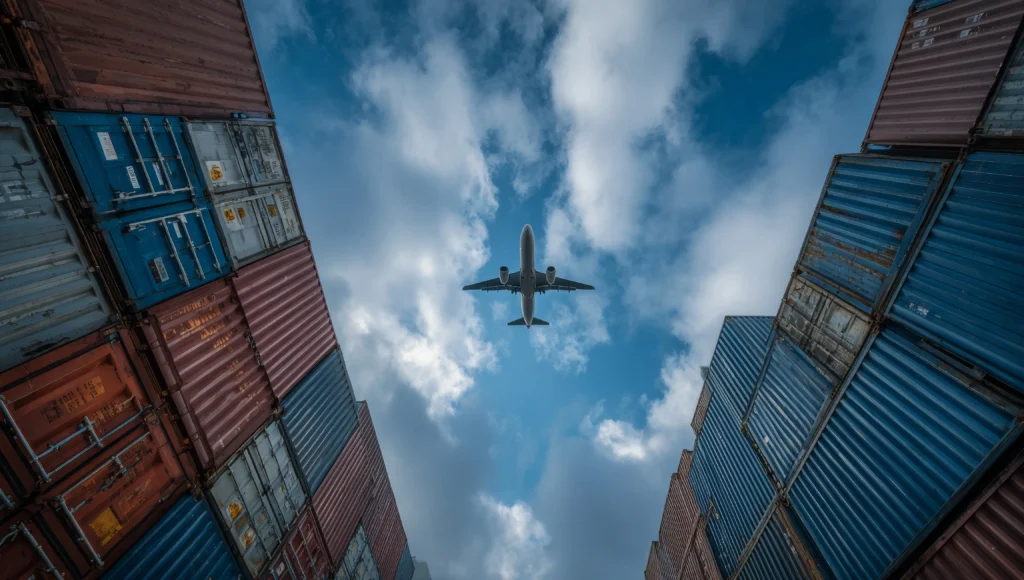
The Core Trade-Off
Every decision between air and ocean freight comes down to balancing three factors against each other: speed, cost, and volume.
- Speed: Air freight typically moves cargo in one to five days, depending on origin and destination. Ocean freight can take several weeks, depending on the route.
- Cost: Ocean freight is significantly cheaper per unit of cargo, particularly for larger shipments. Air freight costs considerably more, especially for heavy or bulky goods.
- Volume: Ocean freight suits large shipments efficiently. Air freight becomes costly quickly as shipment size and weight increase.
When Air Freight Is the Right Call
Air freight tends to make sense when speed matters more than cost, or when the value or urgency of the cargo justifies the additional expense.
- Time-sensitive shipments, where a delay would cause a significant operational or commercial problem.
- High-value goods, where the cost of air freight is small relative to the value of the cargo being moved.
- Perishable or sensitive goods that cannot tolerate the longer transit times associated with ocean freight.
- Unexpected stock shortages, where replenishing inventory quickly outweighs the cost of faster shipping.
When Ocean Freight Is the Right Call
Ocean freight tends to be the better option when cost efficiency matters more than speed, and when shipments can be planned with sufficient lead time.
- Large or heavy shipments, where the cost savings of ocean freight are most significant.
- Non-urgent restocking, where longer lead times can be planned into inventory management in advance.
- Lower-value goods, where air freight costs would represent a disproportionate share of total product value.
- Regular, predictable shipments, where transit times can be built reliably into supply chain planning.
Making the Decision Under Time Pressure
The hardest decisions are rarely the obvious ones. They tend to come up when a business is dealing with an unexpected stock shortage, a supplier delay, or a shipment that needs to move faster than originally planned.
In those situations, it helps to ask three questions directly: what is the actual cost of the delay if the cargo moves by sea instead of air? Does the value of the goods justify the extra cost of air freight? And is there a hybrid option, such as splitting the shipment between air and ocean, that balances urgency against cost more effectively than choosing one mode entirely?
An experienced freight forwarder can usually answer these questions quickly, based on current capacity, routing options, and realistic transit estimates, rather than working from cost alone.
Choosing the Right Mode for Each Shipment
There is rarely a single right answer between air and ocean freight. The right choice depends on the specifics of each shipment and how much weight is given to speed versus cost in that particular case.
At IFS, the team works with businesses to assess these trade-offs shipment by shipment, drawing on established carrier relationships across both air and ocean freight to find the option that fits the situation, not just the default.
Frequently Asked Questions
Is there a middle option between air and ocean freight?
Yes. Some businesses split shipments, sending urgent quantities by air and the remaining volume by ocean, to balance speed and cost depending on what is actually needed immediately.
How much more expensive is air freight than ocean freight?
This varies significantly by route and cargo type, but air freight is typically several times more expensive per kilogram than ocean freight, which is why it tends to be reserved for urgent or high-value shipments.
Can the decision be made shipment by shipment?
Yes. Many businesses do not commit to one mode permanently. The right choice often depends on the specific cargo, urgency, and cost considerations for each individual shipment.